Crafting a Powerful Board Profile: Key Elements to Secure Your Seat
Today's boardrooms are seeking people who can lead with vision, contribute independent insight, and handle complex strategic decisions—not just people with titles and years of experience. At that point, having a strong board profile becomes crucial.
To be appointed to the board, you must be able to clearly communicate your value and skills at the board level. This should be accomplished by your board profile. It is a powerful statement that can help you get a job if you do it right. If you do it wrong, the opposite will occur.
To increase your chances of landing an interview, you must write a compelling board profile before applying for board positions or creating your board resume. This task presents a significant challenge to most potential independent board members. But once you're done, you'll be able to stand out from the competition and proudly display your unique contributions.
In this blog, we'll look at how to create a board profile using this guide that conveys your boardroom readiness with confidence and clarity rather than just listing your qualifications. Every element of your profile is important, from outlining your distinct value proposition to highlighting pertinent accomplishments and matching board priorities. This is the starting point if you're ready to position yourself seriously for board consideration. A well-written profile not only opens doors, but it also conveys to decision-makers that you are welcomed.
Why a Strong Board Profile Matters in Today’s Governance Landscape
Evolving Expectations from Independent Directors and Board Members
The modern boardroom is under growing pressure to perform—not just oversee. Today’s boards are expected to address complex global challenges, from climate risk and cyber threats to regulatory compliance and social responsibility. This has fundamentally reshaped the expectations from board members, particularly independent directors. Experience alone is not enough. Boards now seek individuals who bring critical thinking, sound judgement, industry insight, and the ability to guide executive teams without stepping into operational roles.
Board member positions do not involve direct operational duties. You have to demonstrate your ability to lead and decide as a member of a strategic team.
Stakeholders, investors, and regulators have elevated the expectations for board members. Governance acumen, ethical leadership, and a strategic mindset are prerequisites—especially as boards evolve from ceremonial bodies into active contributors to long-term value.
Role of Board Profiles in Securing High-Impact Roles
Your board profile is more than just an introduction in this ever-changing environment; it is a strategic tool that shows how prepared you are for the board. A board profile, as opposed to a conventional executive summary, needs to highlight your contributions to governance rather than operational execution.
The information in your board profile and executive profile should be very different. You must highlight your accomplishments, experience, value, and skills in relation to serving on a board or contributing at the board level.
It should emphasise the following five essential qualities that the majority of chairs and nominating committees seek: experience in governance, strategic executive skills, valuable networks, evident enthusiasm for the position, and cultural fit.
A successful board member profile must include the five (5) key elements that chairpersons look for in candidates.
Additionally, your visibility and credibility are increased by factors like formal governance qualifications, diversity, and industry experience. The organisation you approach must also make sure it stays focused and relevant.
There shouldn't be a static board profile. It must be somewhat customised for the reader and the organisation.
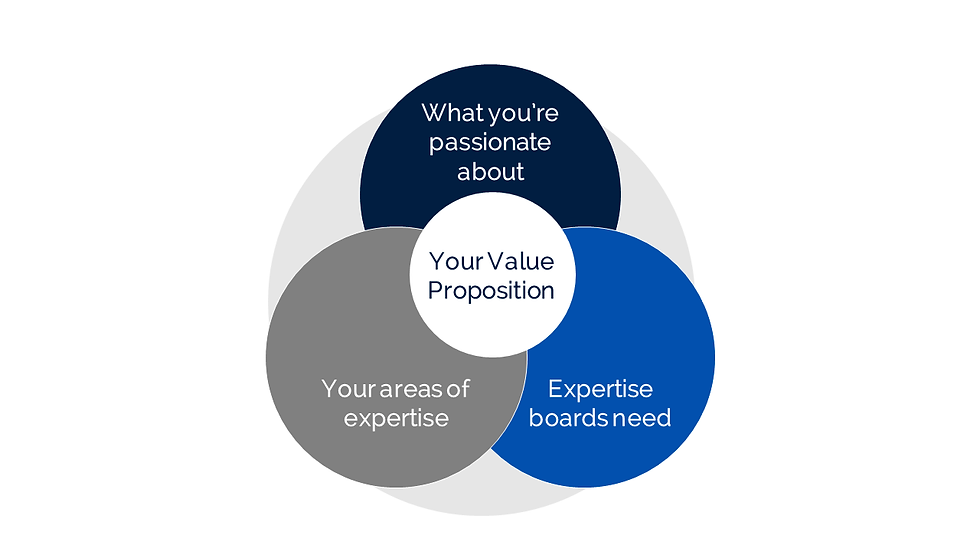
Your personal value proposition is, in essence, a well-written board profile that is strategically positioned to open doors and initiate meaningful conversations with decision-makers.
Understanding the Anatomy of a High-Impact Board Profile
A strong board profile is a strategic document that presents you as a valuable asset to the board's future, not just a resume in a different format. Every section ought to be thoughtfully written to demonstrate how your knowledge, perceptions, and leadership skills complement board-level duties. Let's examine the key elements that, in the current competitive environment, distinguish a board profile.
Professional Synopsis: Your Board Value Proposition
Your introduction—and possibly your only chance to draw attention—is provided by the professional summary. This synopsis should communicate your governance philosophy, strategic thinking, and long-term values to the board, in contrast to an executive biography that emphasises operational accomplishments and corporate metrics.
Start by clearly stating your board-level leadership style: are you renowned for guiding growth through change? Supporting compliance and ethics? Managing the intricacy of regulations in unstable markets? Use a governance lens to frame your strengths. Instead of showcasing your work in operational roles, the objective is to show how you think, advise, and influence as a director.
Emotional intelligence (EI) is a crucial quality for board members in the complicated governance environment of today. It includes empathy, self-awareness, and the capacity to successfully negotiate social situations. High EI boards encourage cooperation in decision-making and increase stakeholder trust.
Board Credentials and Experience in Governance
The core of your board profile is this section. It must highlight not only your areas of service but also the impact you have had. Start by enumerating your previous and current board positions, noting if they were with advisory boards, nonprofits, family businesses, private companies, or public companies.
Then, emphasise your committee experience, including any chairing or contributions to audit, risk, nominations, governance, or CSR committees. Nomination panels and search firms Monitor the depth of the committee, as it demonstrates your ability and comfort in managing technical board responsibilities.
Above all, concentrate on the influence you have had. Did you play a role in guiding the digital revolution? Enhance reporting on ESG? direct the succession of leadership? Mention significant rulings, regulations, or results that came about as a result of your participation. While statistics are useful, insights are more important. What contributions did you make that improved the board's performance or direction?
Typically, board appointments are made to show governance maturity rather than for impressive titles. Emphasise your understanding of fiduciary duties, ethical leadership, and oversight versus management. Demonstrate your ability to think like a director rather than an operator.
Domain Knowledge and Executive Leadership
Your executive background serves as the basis for your board credibility even though the position is not operational. Your experience managing P&L, leading teams, and managing change in intricate business environments should be highlighted in this section. Choose the portions of your leadership narrative that exhibit vision, risk mitigation, and the capacity to impact results on a large scale.
Expertise in fields like global market dynamics, cybersecurity, ESG stewardship, and digital innovation is becoming more and more sought after by boards. It's a positive sign if you've led international teams, supported green projects, or given tech integration advice. Another differentiator is industry-specific knowledge, whether in manufacturing, banking, healthcare, or technology. Emphasise your area of expertise while demonstrating how it contributes to more general board discussions.
Directors who convert operational excellence into strategic vision are highly regarded by boards. You can foresee future difficulties and direct long-term vision by drawing on prior leadership experiences. Effective governance requires the capacity to anticipate and adjust.
Showcasing Skills That Boards Are Actively Seeking
Companies are looking for directors who bring a particular combination of high-impact capabilities as the role of boards becomes more dynamic and complex. The relevance and adaptability of your skills are what can set you apart in board selections— not your reputation or previous roles.
Financial Acumen and Risk Oversight
Boards are responsible for maintaining a company's financial integrity and acting as stewards of long-term value. For the majority of board positions, financial savvy is therefore a must. Directors are expected to analyse budget forecasts, interpret balance sheets, and comprehend the significance of cash flows and financial ratios. Asking the right questions and identifying warning signs in audit and compliance reports are more important than being an accountant.
Good board candidates are able to evaluate risk in a comprehensive way, taking into account everything from operational disruptions to market volatility. Your suitability for board service can be reinforced by showcasing your expertise in working with auditors, managing risk frameworks, or assisting organisations during difficult financial times.
Digital Savvy and Tech Governance
Boards must direct tech strategy in addition to managing IT budgets as digital transformation shapes the future of every industry. Expertise in fields such as artificial intelligence, data privacy, cybersecurity, and digital customer engagement is highly regarded. Directors must understand the strategic ramifications of technology investments, but they are not required to be technologists.
Candidates for the board who have spearheaded innovation or digital projects offer a forward-thinking viewpoint. This is especially important for industries that are experiencing rapid technological change or digital disruption.
ESG and Sustainability Awareness
These days, corporate performance and reputation are heavily influenced by environmental, social, and governance (ESG) considerations. Board members must be able to see beyond profit and incorporate social impact, ethical leadership, and climate risk into business choices.
It is becoming more widely accepted that a key board duty is to comprehend how ESG contributes to shareholder value, whether through long-term investment strategy, reputation management, or regulatory compliance.
Communicating Your Unique Boardroom Identity
Personal Branding for Board Success
Your board profile is a declaration of intent, not just a biography. Personal branding for board opportunities needs to demonstrate governance maturity, strategic credibility, and conformity to board-level standards. Recruiters and nominating committees will view you more favourably if you remain consistent across all professional platforms, including your executive bio, board resumes, LinkedIn profile, and nominations.
Instead of leading operations, emphasise your capacity to supervise, influence, and provide strategic value. Your story should reflect the themes of innovation or ESG leadership if you want to be on boards that emphasise those areas. Instead of just summarising your career, your branding should make the journey relevant in the boardroom.
Tone, Language, and Positioning
A change in tone is necessary to create a profile that is board-ready. Make use of purposeful, strategic language that conveys experience in governance, industry knowledge, and decision-making maturity. Alignment with board-level functions is indicated by terms like "oversight," "fiduciary responsibility," "risk governance," and "strategic direction."
Steer clear of managerial or operational jargon; phrases like "project owner", "team lead", or "day-to-day operations" may inadvertently minimise your preparedness for board service.
Instead, focus on value creation, long-term effects, and results. Even the way you characterise accomplishments should emphasise strategic contributions over execution.
In the end, your boardroom persona should convey confidence, competence, and clarity. Being relevant is more important than being impressive.
Structuring the Board Profile: Format & Flow
Ideal Profile Layout
A strong board profile begins with the basics—your name, designations, and contact details. These should be followed by a board summary that encapsulates your governance philosophy and experience. Immediately afterwards, include a brief breakdown of your governance roles, emphasising your past board-level involvement. This section should touch upon any board committees you’ve served on, such as audit, risk, or nominations, and outline your strategic contributions.
Following this, your executive history should be presented in a concise manner. Focus on your highest-profile roles and your strategic impact in those positions, rather than operational details. This layout allows a prospective board to quickly gauge your suitability.
Do’s and Don’ts of Board Profile Writing
Do’s:
Keep your profile concise and focused on achievements. A board profile should not exceed the essentials; highlight key successes that demonstrate your value at the board level.
Use strategic board-level language, emphasising value creation, risk management, and strategic oversight.
Don’ts:
Avoid lengthy job descriptions or operational tasks that are irrelevant to board-level responsibilities.
Do not include irrelevant details that distract from your governance expertise.
The Opening Sentence: Start with a clear statement of your board-level experience. For example, “I am an Independent Director with extensive experience in governance and strategic oversight.”
The 2nd & 3rd Sentences: Expand on your unique skills and how you contribute at the board level. For example, "At the board level, I specialise in risk governance and strategic decision-making, bringing an outside perspective to enhance long-term value."
The 4th Sentence: Provide highlights of your board roles and significant contributions. Focus on outcomes rather than responsibilities.
The 5th Sentence: Summarise your executive experience and focus on your most relevant and high-profile positions.
The Final Sentence: Mention any governance qualifications, such as an MBA or relevant industry certifications, to showcase your commitment to continuous learning and governance excellence.
By following this structure, you ensure that your profile is both comprehensive and targeted for board-level positions.
Amplifying Your Board Profile Through Visibility Channels
Networking with Search Firms and Governance Bodies
Making Connections with Governance Organisations and Search Firms:
Working with governance organisations and executive search firms is one of the best ways to raise your profile as a board candidate. These organisations are frequently entrusted with finding and endorsing potential board members. Share your board profile with these firms directly to make sure your profile is taken into consideration. By doing this, you can make sure they are aware of your background and credentials and can remember you for future opportunities.
Additionally, your chances of being considered for board appointments can be greatly increased by listing in board talent databases or directories. Search companies regularly use these databases, so having your profile listed there gives decision-makers another way to see it.
Participate actively in governance organisations that are related to your field of expertise, such as the National Association of Corporate Directors (NACD). These organisations frequently offer beneficial networking opportunities and could be a resource for board appointments, giving you the chance to interact with professionals who share your interests and enhance your standing as a possible board member.
Leveraging Digital Platforms
Today, digital platforms like LinkedIn are essential for boosting your board visibility. A well-optimised LinkedIn profile that highlights your governance experience, board-level contributions, and strategic vision can attract the attention of key stakeholders and search firms. Make sure your LinkedIn profile reflects your professional journey and positions you as a board-ready candidate, showcasing your leadership in corporate governance.
Additionally, consider joining Boardsearch.ai – an exclusive repository of senior professionals. If you are aiming for a CXO or board-level role, being listed on Boardsearch ensures your profile is seen by top decision-makers. This platform is designed for senior leaders who don’t search for jobs but attract opportunities directly. Having your profile featured on Boardsearch allows opportunities to come to you, rather than the other way around.
Another way to amplify your profile is by participating in board-related events such as webinars, conferences, and industry panels. Speaking at such events not only demonstrates your expertise but also increases your visibility within the boardroom ecosystem. Engaging in media commentary on governance issues further enhances your authority and visibility. Publishing articles or offering insights on board-related topics can solidify your standing as a thought leader in the field, driving more opportunities to connect with boards seeking your expertise.
By strategically utilising these visibility channels, including platforms like Boardsearch.ai, you can maximise your chances of securing board roles and strengthen your professional reputation.
Common Mistakes to Avoid When Crafting a Board Profile
When crafting a board profile, it’s easy to make mistakes that can detract from your overall effectiveness. One common error is focusing too much on operational achievements. While operational expertise is valuable, board members need to demonstrate their ability to oversee, strategise, and offer governance. Instead of listing day-to-day accomplishments, highlight your strategic decisions and board-level contributions.
Another mistake is being too generic in your claims of expertise. Broad statements like “experienced leader” or “versatile professional” don’t resonate with board chairs who are looking for specific skills and experiences that align with their current needs. Tailor your profile to emphasise the unique value you bring, such as your expertise in digital transformation, risk oversight, or executive leadership.
Lastly, failing to align your experience with the current needs of boards is a critical misstep. Boardrooms today are seeking directors with specific competencies in areas like ESG, cybersecurity, and financial oversight. Make sure your profile speaks to these areas and demonstrates how your skills align with the evolving expectations of modern governance.
Final Checklist — Is Your Board Profile Boardroom-Ready?
Before submitting or sharing your board profile, ensure it meets the key criteria for success. Here's a final 10-point checklist to evaluate whether your profile is truly boardroom-ready:
Strategic Impact: Does your profile reflect strategic contributions and high-level decision-making?
Governance Experience: Have you clearly outlined your board-level experience, including committees served and roles held?
Expertise Alignment: Does your profile address the current needs of boards (e.g., digital, risk, or ESG)?
Concise and Targeted: Is your profile free of unnecessary details, focusing on key achievements?
Leadership Skills: Does it showcase your leadership in transformation and governance?
Industry Relevance: Have you tailored your profile to the industry or sectors you want to serve?
Personal Branding: Is your profile consistent across platforms and aligned with your board aspirations?
Quantifiable Achievements: Have you included measurable outcomes to demonstrate your impact?
Cultural Fit: Does your profile reflect your ability to contribute to the board’s dynamic and culture?
Professional Presentation: Is your profile well-written, error-free, and professional in tone?
By reviewing your board profile against this checklist, you ensure it is positioned to resonate with board chairs, search firms, and other decision-makers in the governance space.
Conclusion: Position Yourself as a Board-Ready Leader
To position yourself as a board-ready leader, intentional branding and clarity are key. Clearly articulate your unique value, aligning your experience with the evolving needs of boards. Regularly update your board profile to reflect your current capabilities and aspirations. Seek feedback from trusted mentors and peers to refine your profile. Networking strategically is equally important—engage with board members, attend industry events, and stay informed about governance trends. By taking these actions, you enhance your visibility and increase your chances of securing meaningful board opportunities. To take the next step in your board career, get listed on Boardsearch.ai. Click here to learn more.


Comments