Tarun Garg Takes Charge As MD and CEO Of Hyundai Motor India

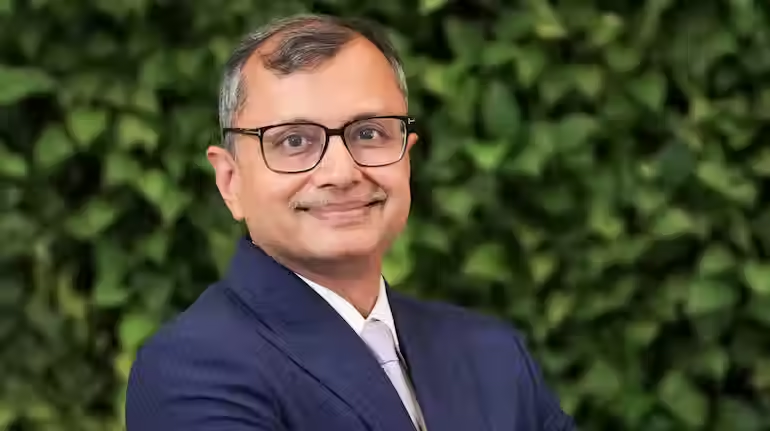
Tarun Garg has assumed the role of Managing Director as well as CEO of Hyundai Motor India, starting the 1st of January, 2026. It is not just another leadership shuffle but a bet step-up. For the first time in almost three decades, an Indian will run the show at Hyundai in India. That says a lot about where the company’s confidence lies and just how important India has become on the global car map.
Garg is not new to this world. He has spent over 32 years in the auto industry and has been a key player at Hyundai for years. He has done everything from running Sales, Service and Marketing to being the Chief Operating Officer. Under his watch, Hyundai did not just grow; it broke records. Three years running, they hit their best sales ever, posted top-notch profits and pulled off India’s largest IPO in 2024. Hyundai surged ahead in SUVs—think about how much those cars have changed what you see on Indian roads now.
He understands the business inside out—sales, marketing, finance, product, you name it. That is exactly what Hyundai needs right now. The Indian market is moving fast: EVs, smart tech and a serious push toward sustainability are all changing the rules. India’s racing to become the world’s third-largest economy and Garg’s leadership comes right when everything is about to shift.
Hyundai’s story in India is all about adapting and growing. They entered back in 1996 with the Santro. Since then, they have gone from importing cars to building them here at two massive plants in Tamil Nadu. Now, they roll out over 8.3 lakh cars a year and claim about 14-15% of the market. That puts them right up there with Maruti Suzuki and Tata.
Before this, Garg led efforts that really set Hyundai apart. He pushed for customer-first ideas like Blue Link (the connected car tech) and subscription models. His focus on SUVs—Creta, Venue, Exter—hit the sweet spot for young buyers. The blockbuster IPO in 2024, which raised over ₹27,300 crore, was not just about money. It was Hyundai saying, “We believe in India’s future,” and the market rewarded them.
Financially, Hyundai thrived with Garg calling the shots. They sold more, spent smart and moved upmarket—so profits followed. All this happened while the industry battled supply chain messes and chip shortages. It was not luck. It was smart, steady leadership.
Looking ahead, Garg sounds genuinely excited. “India’s auto industry is at a major turning point. It is all about innovation, sustainability and what customers want next,” he says. His plan? Build on Hyundai’s strengths, speed up the shift to greener tech and keep customers at the centre. He is betting big—₹45,000 crore by 2030—on local manufacturing, R&D and ramping up their capacity. That fits right in with the ‘Make in India’ push. Hyundai already ships cars to over eighty countries from India and Garg wants to turn the country into a true global export hub.
Sustainability is front and centre. With India’s push for electric vehicles, Hyundai’s moving fast: the Ioniq 5 is out, the Ioniq 6 is coming and there are plans for more EVs made in India. They’re looking at battery partnerships and even hydrogen cars. On the customer side, expect tech-driven, super-personalised service—AI in after-sales, loyalty programmes that actually mean something to Indian buyers.
One thing that stands out about Garg is his people-first approach. He cares about more than just profits, backing community programmes like Hyundai’s SAMARTH for skill-building and water projects. In an industry that gets a lot of criticism for how it treats workers, that kind of leadership makes people want to stick around and do their best.
Challenges and Opportunities Ahead
India’s auto market is on fire—worth $160 billion now and growing fast at 10% each year. There is a tonne of potential but plenty of obstacles, too. The competition’s fierce, with Tata killing it in EVs, Mahindra owning the SUV space and global players like MG and BYD jumping in. You cannot afford to stand still. On top of that, new rules—stricter BS-VI emissions, CAFE fuel standards, unpredictable export tariffs—make things trickier. This is where Garg’s knack for finance comes in handy, especially when raw material prices keep swinging.
But the upside? It is huge. SUVs are everywhere now—just a few years ago, they made up 20% of the market and now it is over half. Rural demand is picking up, thanks to good monsoons and big spending on infrastructure, which should help boost sales of entry-level cars. Exports give Hyundai a cushion when the local market slows down and new tech like ADAS and software-driven cars help the brand look sharp and innovative.
Garg’s deep roots in India give him an edge. He gets those little details—like how car sales spike during festivals, why diesel matters more up north or what millennials want from a car. He is got a track record for blending global know-how with local smarts—just look at how he turned the Venue into a game-changer.
Why this Matters for India Inc.?
Tarun Garg’s new role is not just about Hyundai—it is a big moment for Indian leadership. Multinationals like Hyundai, with most of their parts sourced locally, are starting to trust local talent more and more. We have seen this at Unilever and PepsiCo India, too. It is a win for the ‘son-of-the-soil’ story, helps align with local policies and speeds up the push to make things in India.
Investors should be happy—since the IPO, Hyundai’s stock has rewarded those who stuck around. With Garg at the helm, there is a good shot at even better returns. For car buyers, this could mean more daring designs, maybe a budget EV hatchback or a sporty SUV that actually thrills. Employees and local communities can expect more inclusive growth, since Garg’s known for putting people first.
As Hyundai Motor India rolls into its fourth decade, Tarun Garg is primed to lead the next act. With so much change in the air, his mix of experience, sharp vision and ability to get things done could lock in Hyundai’s spot at the top of India’s auto scene. Honestly? The road ahead looks anything but boring.


Comments